7 IRS Red Flags That Trigger Audits in 2026 (And How Clean Books Protect You)
![[HERO] 7 IRS Red Flags That Trigger Audits in 2026 (And How Clean Books Protect You)](https://cdn.marblism.com/wiGgUqYqcrB.webp "[HERO] 7 IRS Red Flags That Trigger Audits in 2026 (And How Clean Books Protect You)")
Nobody wakes up hoping to be audited by the IRS. Yet every year, thousands of small business owners receive that dreaded notice: not because they intentionally did anything wrong, but because their books triggered an algorithm somewhere in the IRS system.
The good news? Most IRS audit red flags are completely preventable with clean, accurate bookkeeping. The IRS isn't out to get you: they're looking for inconsistencies, discrepancies, and patterns that suggest underreported income or inflated deductions. When your books are organized, reconciled, and backed by solid documentation, you're already miles ahead of the audit game.
Here are the seven small business tax audit triggers that matter most in 2026: and how clean books protect you from every single one.

1. Unreported or Mismatched Income
This is the #1 audit trigger, hands down. The IRS automatically matches every W-2, 1099, K-1, and other income document filed by employers and financial institutions through its Automated Underreporter (AUR) system. If your tax return shows $80,000 in income but your 1099s add up to $85,000, the IRS computer flags your return immediately.
Even small mismatches result in CP2000 notices: the IRS's "friendly reminder" that your numbers don't add up. And in 2026, with improved AI matching systems, these notices are more common than ever.
How clean books protect you: When you reconcile all income sources before filing, you catch these discrepancies early. A good bookkeeping system tracks every 1099, every payment, and every deposit: so your tax return matches reality down to the penny.
2. Excessive Deductions Relative to Income
The IRS uses a system called the Discriminant Function (DIF) that compares your deductions to national averages for your industry. If you run a consulting business and claim $50,000 in "office supplies" on $100,000 in revenue, that's going to raise eyebrows.
Your return is automatically scored based on how far your deductions fall outside the norm for businesses in your NAICS code. The further you deviate, the higher your audit risk.
How clean books protect you: Detailed expense categories tell the real story. Instead of lumping everything into "miscellaneous," clean books break out advertising, software subscriptions, contract labor, and supplies separately: making every deduction defensible and industry-appropriate.

3. Round Numbers on Tax Returns
Here's a simple one that catches more people than you'd think: round numbers. Legitimate business transactions produce irregular amounts: $8,247 in advertising, $3,892 in travel expenses, $12,114 in contractor payments.
When your tax return shows income of exactly $150,000 or deductions of precisely $75,000, it looks fabricated. The IRS knows that real businesses don't operate in perfectly round figures.
How clean books protect you: Transaction-level bookkeeping automatically produces real numbers. You're not estimating or guessing: you're reporting what actually happened, down to the cent.
4. Cash-Intensive Businesses and Large Cash Transactions
If your business deals primarily in cash: restaurants, bars, hair salons, car washes, retail stores, construction contractors: you're already on the IRS's radar. Cash creates opportunities for underreporting income, so cash-heavy industries face dramatically higher audit rates.
The IRS monitors deposits over $10,000 and now uses AI to track deposit patterns. Frequent large cash deposits without corresponding income on your return? That's a red flag.
How clean books protect you: Deposit every dollar of cash and maintain detailed records of each transaction. When your books show a clear paper (or digital) trail from customer payment to bank deposit to income reporting, there's no mystery for the IRS to investigate.
5. Income Discrepancies Between Years
Significant year-over-year changes trigger algorithm reviews. If your income jumps from $80,000 to $300,000, or your deductions suddenly double from one year to the next, the IRS wants to know why.
These changes aren't necessarily problems: maybe you expanded, landed a major client, or made a one-time equipment purchase. But unexplained changes look suspicious.
How clean books protect you: Clean books document the business reasons for changes. Your monthly reports show when that new revenue stream started. Your equipment purchase is clearly categorized and dated. When you can explain the "why" behind the numbers, there's no red flag.
6. Poor Bookkeeping and Unreconciled Accounts
Here's the meta red flag: the IRS now flags poor bookkeeping itself. Unreconciled accounts, negative balances in accounts that shouldn't be negative, expense categories that don't make sense for your industry, incomplete records: these are all indirect audit triggers in 2026.
The IRS's updated systems can detect messy books from a mile away. And messy books suggest either incompetence or intentional obfuscation: neither of which improves your audit odds.
How clean books protect you: This one's obvious. When your accounts are reconciled monthly, expenses are properly categorized, and your documentation is complete, you don't trigger this flag at all. Clean books signal to the IRS that you're running a legitimate, well-organized operation.

7. Home Office and Other Commonly Audited Deductions
Home office deductions, vehicle expenses, travel and entertainment, and meals: these are all legitimate business deductions that the IRS scrutinizes heavily because they're commonly abused.
To claim a home office deduction, you need exclusive and regular use of a dedicated space. For vehicle expenses, you need mileage logs. For meals and entertainment, you need receipts and notes about the business purpose of each expense.
How clean books protect you: Clean bookkeeping systems maintain contemporaneous documentation: the kind the IRS demands. Your home office square footage is calculated and documented. Your mileage is tracked in real-time. Your meal expenses include notes about who you met and what you discussed. When audit time comes, you have everything the IRS asks for.
How to Avoid Tax Audit Stress: The Clean Books Advantage
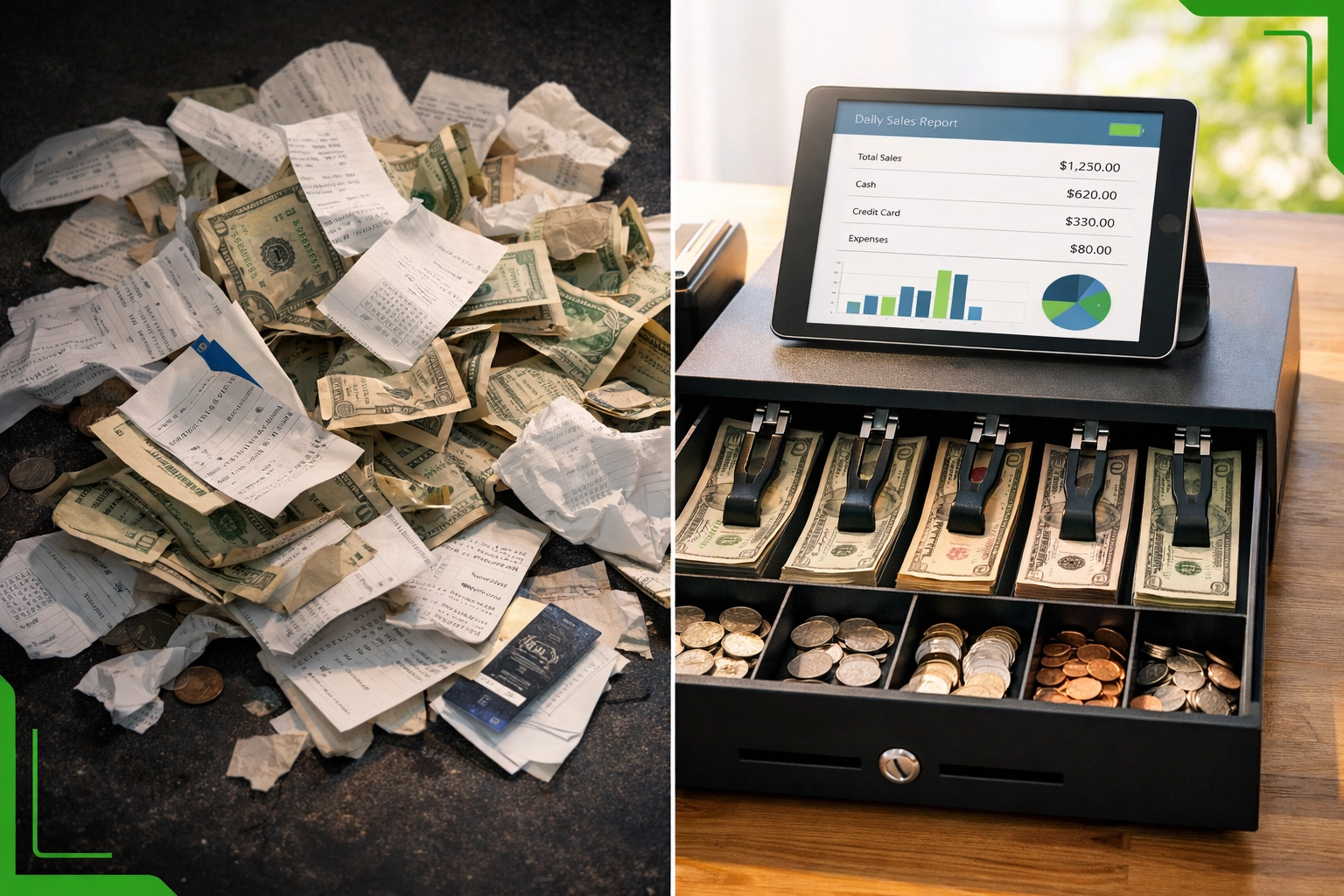
Notice the pattern? Every single one of these small business tax audit triggers boils down to one thing: poor documentation. The IRS doesn't audit businesses with clean, organized, defensible records nearly as often as those with messy books and questionable numbers.
That's where having 24/7 access to your financial data becomes crucial. When you can log in anytime and see exactly where your business stands: reconciled accounts, categorized expenses, complete documentation: you catch errors before they become red flags. You spot the missing 1099 in February instead of discovering it in an IRS notice in September. You notice the expense categorization issue and fix it immediately.
Clean books aren't just about tax time. They're about running your business with confidence every single day, knowing that if the IRS ever does come knocking, you've got nothing to hide and everything to prove your case.
At Bookkeeping Made Simple, we specialize in the kind of accurate, reconciled, well-documented bookkeeping that keeps the IRS happy: and keeps you audit-proof. Because how to avoid tax audit stress isn't complicated: keep clean books, document everything, and reconcile religiously.
Your CPA will thank you. And more importantly, you'll sleep better knowing your books can withstand any scrutiny.