Late Payments Wrecking Your Cash Flow? How to Create a 30-Day Safety Net
![[HERO] Late Payments Wrecking Your Cash Flow? How to Create a 30-Day Safety Net](https://cdn.marblism.com/9uNN6Th2Agl.webp "[HERO] Late Payments Wrecking Your Cash Flow? How to Create a 30-Day Safety Net")
You just delivered incredible work for a client. The project went off without a hitch. You sent the invoice right away. And then... crickets.
Days turn into weeks. Your own bills are piling up. Payroll is coming due. You're stuck checking your bank account every morning like it's a lottery ticket, hoping that payment finally landed.
Sound familiar? Late payments are one of the biggest silent killers of small business cash flow. And here's the kicker, even when you eventually get paid, the damage is already done. You've stressed, scrambled, and maybe even missed opportunities because you didn't have the working capital you needed when you needed it.
The good news? You don't have to play this waiting game anymore. Let's talk about how to build a 30-day safety net that protects your business from the cash flow chaos of late payments.
Why Late Payments Are More Expensive Than You Think
Before we dive into solutions, let's get real about what late payments actually cost you.
It's not just about waiting for money. When clients pay late, you're:
Covering their expenses with your money. You've already paid your team, your suppliers, your software subscriptions, all while waiting for that check.
Missing growth opportunities. That marketing campaign you wanted to test? The equipment upgrade that would save you time? Can't do it when your cash is tied up in unpaid invoices.
Spending time chasing payments. Every follow-up email and phone call is time you're not spending on revenue-generating work.
Losing sleep. The mental load of wondering whether you can cover next month's expenses is exhausting.
This is why cash flow management for small business isn't just accounting jargon, it's survival. And the solution isn't just "get better clients." (Though that helps!) The solution is building a system that protects you even when payments run late.

The Three Pillars of Your 30-Day Safety Net
Creating a real safety net requires three layers of protection: prevention, active management, and financial backup. Let's break down each one.
Pillar 1: Prevention (Stop Problems Before They Start)
The best way to handle late payments is to avoid them in the first place. Here's how:
Require deposits upfront. This is non-negotiable. Collect 30-70% before you begin any work, with 50% or higher being ideal for larger projects. This accomplishes two things: it proves your client is serious, and it gives you working capital immediately. No more fronting all the costs yourself while hoping they'll pay at the end.
Set crystal-clear payment terms. Your invoices should spell out exactly when payment is due, what happens if it's late (hello, late fees), and how clients can pay. Ambiguity is the enemy of timely payments. When clients know the rules upfront, including the consequences, they're far more likely to pay on time.
Offer early payment incentives. Here's a smart move: pair your late fees with early payment discounts. The classic "2/10 Net 30" structure (2% discount if paid within 10 days, full amount due in 30) gives clients a financial reason to prioritize your invoice. You're making it a win-win instead of just punitive.
Use retainer agreements for recurring clients. If you have clients who need ongoing work, switch them to a retainer model. Predictable monthly payments eliminate the invoice-chase cycle entirely and give you reliable revenue you can actually plan around.
Pillar 2: Active Management (Control the 30-Day Window)
Even with prevention measures, some payments will still lag. That's where active management comes in.
Send consistent reminders. Don't wait until day 31 to follow up. Send friendly reminders every few days after sending the initial invoice. A simple "Hey, just making sure you received this!" message can prevent forgetfulness from turning into a late payment. If a payment is missed, act immediately, not in a week.
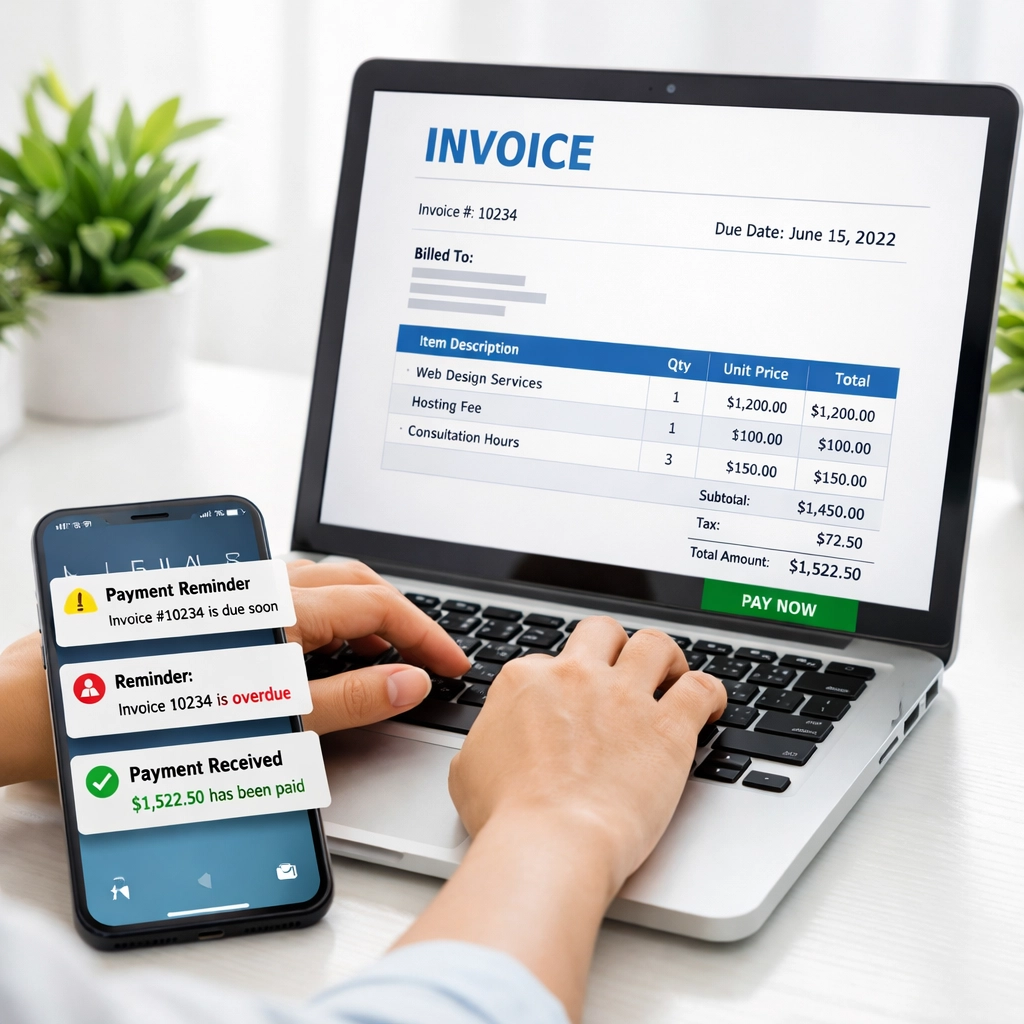
Make paying ridiculously easy. The more friction there is in your payment process, the more likely clients are to procrastinate. Offer multiple payment options: credit cards, ACH transfers, digital wallets, even good old-fashioned checks. Better yet, use automated invoicing systems that let clients pay with one click. Consider setting up automatic billing for recurring clients so they don't even have to think about it.
Implement milestone payments for longer projects. Instead of waiting until project completion to get paid, tie payments to specific milestones. You hit phase one? You get paid. Phase two? Another payment. This keeps cash flowing throughout the project instead of creating one giant vulnerability at the end.
Create a business cash flow forecast. This is where knowing how to improve business cash flow becomes critical. A simple forecast shows you what's coming in, what's going out, and where the gaps are. When you can see 30 days ahead, you're not surprised by a cash crunch, you're prepared for it.
Pillar 3: Financial Backup (Your Emergency Fund)
Even with prevention and active management, life happens. Clients face their own cash flow issues. Unexpected expenses pop up. This is where your financial buffer comes in.
Build a cash reserve. Aim to save 3-6 months of operating expenses. Yes, it sounds like a lot. But this cushion is what allows you to breathe when a big client pays late or a surprise expense hits. Start small if you need to: even a one-month reserve makes a huge difference.
Diversify your client base. If one or two clients represent most of your revenue, their late payments can sink you. Spreading your income across multiple clients reduces your risk. If one pays late, the others keep you afloat.
Be willing to negotiate payment plans. If a typically reliable client is struggling, consider breaking their payment into smaller installments over several months. You're more likely to get paid this way than by demanding the full amount immediately, and you preserve the relationship.

How to Actually Get Clients to Pay on Time
Let's get specific about how to get clients to pay on time without damaging relationships.
Balance firmness with flexibility. Use late payment fees consistently: they cover your collection costs and encourage prompt payment. But show grace to good clients facing temporary issues. The key is consistency: chronic late payers need consequences, while valued clients with a one-time problem deserve understanding.
Communicate consequences clearly. Don't make late fees a surprise. State them upfront in your contracts and on every invoice. When clients know what to expect, they can't claim they didn't understand the rules.
Follow up personally for large amounts. For significant invoices, a phone call is more effective than an email. It's harder to ignore, shows the payment matters, and lets you address any issues immediately.
Know when to cut your losses. Sometimes, despite your best efforts, a client just won't pay. Have a clear process for when you'll send an invoice to collections or write it off. Chasing a $500 invoice for months isn't worth your time or mental energy.
The Missing Piece: Financial Visibility
Here's what ties all of this together: you can't manage what you can't see.
Most small business owners are flying blind with their cash flow. They know roughly what's in the bank, but they don't have a clear picture of what's coming due, which invoices are outstanding, or whether they can afford next month's expenses.
This is where solid bookkeeping changes everything. When you have real-time visibility into your finances, you can:
Spot cash flow problems before they become emergencies
Make confident decisions about spending and investments
Know exactly which clients are worth chasing and which aren't
Create accurate forecasts that actually help you plan
At Bookkeeping Made Simple, we give you that visibility. No more guessing, no more surprises: just clear, accurate financial data that helps you build and maintain your 30-day safety net.

Your Action Plan: Build Your Safety Net This Week
Ready to stop the cash flow chaos? Here's where to start:
This week:
Review your current invoices and add clear payment terms and late fees
Set up at least two additional payment methods for clients
Create a simple spreadsheet tracking all outstanding invoices and their due dates
This month:
Implement deposit requirements for all new projects
Set up automated invoice reminders
Start building your cash reserve, even if it's just $500 to start
This quarter:
Create a basic business cash flow forecast for the next 90 days
Review your client concentration and plan to diversify if needed
Establish clear policies for payment plan negotiations
The truth is, late payments will probably always happen. But with the right systems in place, they don't have to wreck your cash flow. Your 30-day safety net catches you before you fall.
Want to see exactly where your cash flow stands today? Let's talk. We'll help you build the visibility and systems you need to stop stressing and start growing.