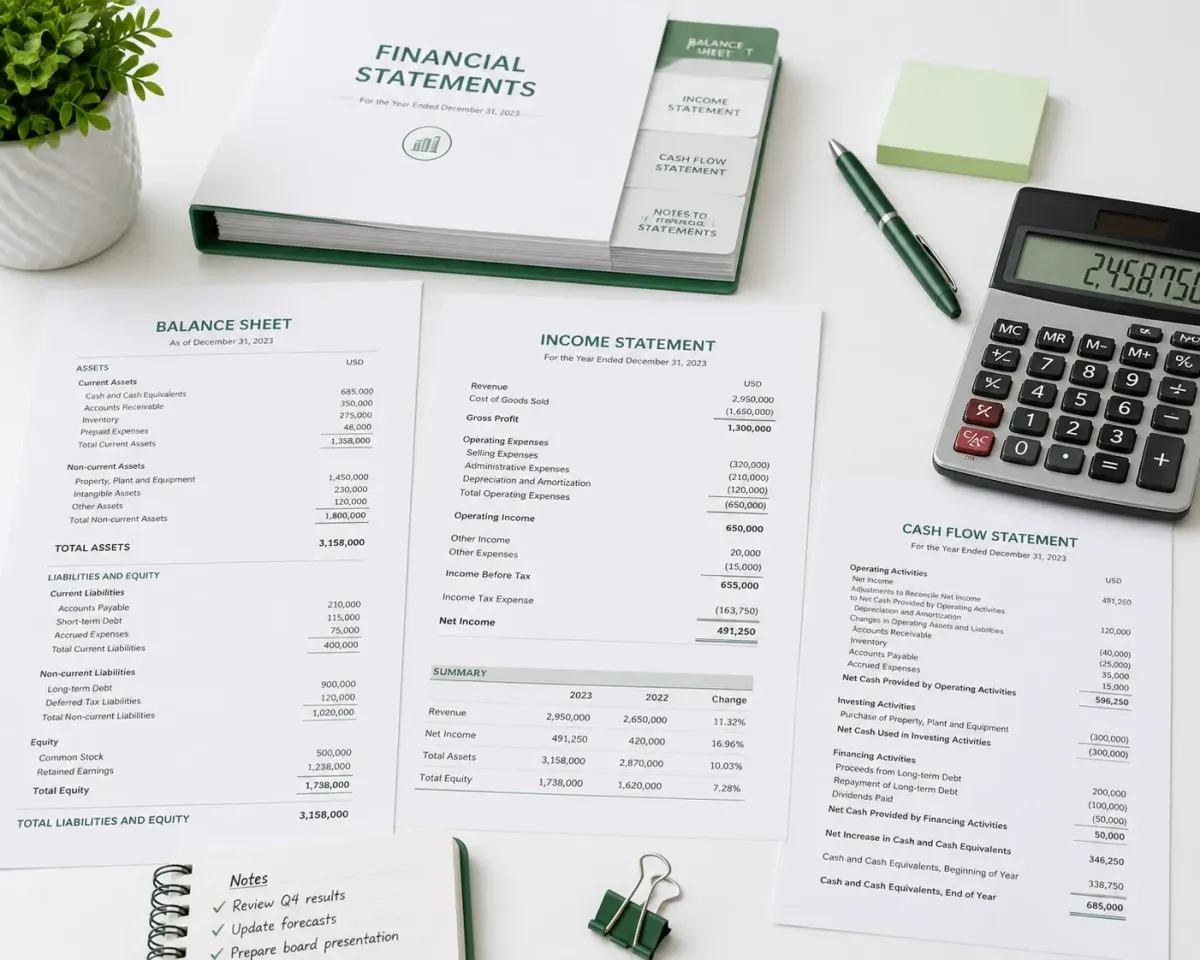
Do You Know Your Books Are Right : Or Do You Just Assume?
Do You Know Your Books Are Right : Or Do You Just Assume?

There is a difference between books that look fine and books you know are right.
If your accounting software produces a monthly profit and loss statement, it can be tempting to assume the numbers are accurate. After all, the report exists. The transactions are categorized. The charts look professional.
But a P&L is an output, not the work.
The reliability of your financial statements depends on what happened before someone clicked “run report”: Were your accounts reconciled? Were discrepancies investigated? Were balance-sheet accounts reviewed? Were unusual balances explained and corrected?
As Q4 approaches, this distinction becomes especially important. You are likely making decisions about cash, hiring, pricing, distributions, year-end purchases, and next year’s plans. Those decisions deserve more than numbers that simply look complete.
Here are five signs your books may not be as reliable as you think: and what you can do next.
1. Your balance sheet contains unexplained balances
Many business owners look primarily at the P&L. That makes sense: revenue, expenses, and net income are easy to understand at a glance.
But the balance sheet often reveals whether the underlying bookkeeping work has actually been completed.
Look for balances that you cannot explain, such as:
Negative accounts receivable or accounts payable
Large amounts in uncategorized, suspense, or “ask my accountant” accounts
Old liabilities that should have been paid or cleared
Loan balances that do not match lender statements
Owner equity or draws that seem unusually high
Credit card balances that do not match current statements
Tax accounts with unexplained or outdated balances
An unusual balance is not automatically proof that something is wrong. Some balances are legitimate. The issue is whether someone can explain what the balance represents, why it is there, and whether it agrees with your actual business records.
A balance sheet is not just a collection of numbers. It is a record of what the business owns, owes, and has invested. If those accounts are not accurate, your P&L may be misleading, too.
2. Your net income conflicts with your experience of the year
Have your books reported a healthy profit while your bank account has stayed tight?
That does not always mean the books are incorrect. Profit and cash are different measurements. You may have outstanding invoices, loan payments, equipment purchases, owner draws, or other cash activity that does not appear as a regular expense on the P&L.
Still, a significant and persistent disconnect deserves investigation.
Ask yourself:
Does the reported profit make sense given how the business performed?
Did revenue actually grow, or is one unusual transaction affecting the total?
Are expenses missing from certain months?
Were loan proceeds recorded as income?
Were owner contributions or transfers categorized incorrectly?
Is accounts receivable larger than expected because sales were recorded but cash was not collected?
Did your gross margin change in a way that matches your pricing and delivery costs?
Your intuition is not a substitute for accounting records, but it is useful information. You know what it felt like to operate the business. If the financial statements tell a story that sharply conflicts with that experience, do not ignore the question.
The goal is not to make the numbers match your expectations. The goal is to understand why they do: or do not.
3. Your cash-flow gaps cannot be explained by timing alone
Timing differences are normal. A client may pay an invoice two weeks after it is issued. A vendor payment may clear a few days later than expected. A deposit may be recorded in one period and appear in the bank during another.
But timing should explain a gap: not become a permanent explanation for one.
If your books show available cash that you cannot access, or your bank account is consistently lower than your reports suggest, investigate the details. Common causes include:
Missing transactions
Duplicate deposits or expenses
Incorrect opening balances
Personal transactions mixed into business accounts
Merchant deposits recorded without accounting for processing fees
Loan payments recorded only as expenses, without reducing the loan principal
Transfers between accounts recorded as income or expenses
Accounts that have not been reconciled recently
A cash-flow problem can arrive before a P&L problem. You may be profitable on paper and still be unable to cover payroll, vendors, or a planned investment.
That is why reliable bookkeeping includes more than producing a P&L. It also requires understanding how the business’s cash moved and whether the records explain what is happening in your actual accounts.

4. Your accounts have not been reconciled recently
Reconciliation is not simply a button you push to make the software agree with a statement.
A proper reconciliation compares your accounting records with the actual activity shown by your bank or credit card company. Differences are reviewed, explained, and corrected. Legitimate timing differences may remain temporarily, but unexplained discrepancies should not be covered with a plug or adjustment just to make the account balance.
You can learn more about the basic purpose of bank reconciliation and why it is an important part of reliable bookkeeping.
Check the last reconciled date for each:
Bank account
Credit card
Payment processor
Line of credit
Loan account, where applicable
If one account was reconciled last month but another has not been reviewed in six months, your overall financial picture may not be current.
Also look at the reconciliation itself. Are old uncleared checks or deposits appearing month after month? Are large adjustments being used repeatedly? Can your bookkeeper explain each significant difference?
Current reconciliations help catch missing, duplicated, or miscategorized activity. They also give you a more dependable starting point for reviewing the P&L and balance sheet.
5. No one with fresh eyes has reviewed your books in the past year
Your bookkeeper may be hardworking and experienced. You may have a good working relationship. That is valuable.
Still, an independent review can identify issues that become difficult to see when the same person handles the books month after month.
A fresh-eyes review is not necessarily an accusation or an audit. It is a second look at whether:
The chart of accounts still fits the business
Accounts are being reconciled consistently
Balance-sheet accounts are supported
Revenue and expenses are categorized appropriately
Reports are being reviewed: not just generated
Old items are being carried forward without explanation
The bookkeeping process provides information you can actually use
This is particularly helpful when your business has grown, changed software, added accounts, started using a payment processor, taken on debt, or expanded into new products or services.
Sometimes the review confirms that the books are in good shape. That confirmation has value. Other times, it identifies a few corrections before they become larger problems.
How to move from assuming to knowing
You do not need perfect books to begin making better decisions. You need reliable, current information and a process for maintaining it.
Start with these steps:
Request the most recent reconciliation reports for every bank and credit card account.
Review the balance sheet for unusual, negative, or unexplained balances.
Compare year-to-date revenue, expenses, and net income with your actual business experience.
Review accounts receivable and outstanding liabilities.
Ask which items remain unresolved and what is being done to correct them.
Schedule an independent review if you have not had one in the past year.
If the review shows that historical corrections are needed, Bookkeeping Made Simple’s cleanup services can help establish a dependable starting point. Cleanup pricing is $997, $1,997, or $3,500, depending on the scope and complexity of the work.
After the records are reliable, ongoing bookkeeping and accounting services can help keep them current, reconciled, and useful for decision-making.
The question “Can I trust my bookkeeper?” does not have to be uncomfortable. A good answer is not based on a feeling or on whether a report appears in your inbox. It is based on evidence: reconciliations completed, discrepancies explained, balance-sheet accounts supported, and financial statements that reflect the business you are actually running.
Q4 is a better time to gain that confidence than to discover in December: or next spring: that the numbers needed more attention.
Book a Financial Clarity Call
If you are unsure whether your books are right, you do not have to figure it out alone. Donna Harris, MBA, MAcc, and the team at Bookkeeping Made Simple can help you understand what your records are saying and identify the next practical step.
Book a Financial Clarity Call at mysimplebookkeeping.com/contact and schedule your free consultation before Q4 decisions are underway.