How to Collect Receivables Without Damaging Client Relationships
How to Collect Receivables Without Damaging Client Relationships

You delivered exceptional work, your client was thrilled, and you sent the invoice right away. Then... crickets.
Days turn into weeks, and your payment terms (Net 30) quietly slip past. Suddenly, you find yourself staring at an unpaid invoice that is 45 days old. Here is the familiar dread every entrepreneur knows too well: If I follow up too aggressively, will I offend them and lose their future business? But if I stay silent, how am I going to make payroll on Friday?
It is the classic small business tightrope walk. You want to be accommodating, understanding, and easy to work with. After all, you value your clients and want long-term relationships. But treating your accounts receivable as an afterthought is one of the fastest ways to choke your cash flow.
The good news? You do not have to choose between getting paid and keeping clients. Collecting money gracefully isn't about arm-twisting or aggressive demands, it is about having a repeatable system, clear boundaries, and professional communication.
Let's look at how you can build an accounts receivable small business process that protects your cash flow and strengthens your client relationships.
Why Most Small Businesses Struggle With Collections
Ask ten business owners how they handle overdue invoices, and you will likely hear ten variations of the same answer: "I just send another email when I remember," or "I hate asking for money, so I usually wait until it gets really bad."
The root of the problem isn't your clients being malicious. Most of the time, invoices get buried in busy inboxes, forgotten amidst pressing operational fires, or delayed because of a missing detail. However, when you lack a structured system, three major issues arise:
Inconsistency: You follow up on Tuesday because you're stressed about cash, but ignore overdue accounts for a month when business is busy.
Emotional Friction: Because you waited too long, your follow-up email ends up sounding frustrated or defensive.
The Slippery Slope: When clients realize there are no consequences or structured reminders for late payments, your invoice naturally drops to the bottom of their priority list.
Establishing a professional accounts receivable process removes the emotion entirely. It turns collections from a personal awkwardness into a standard operational procedure.
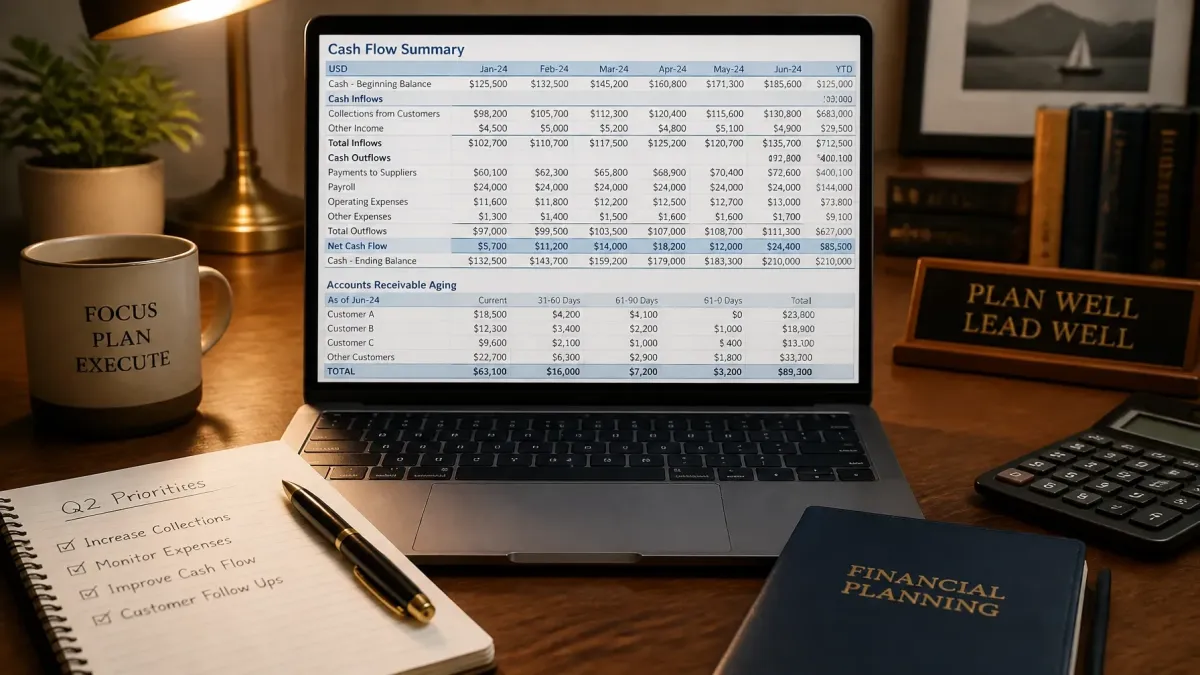
Your Secret Weapon: The Accounts Receivable Aging Report

If you aren't looking at your accounts receivable aging report weekly, you are flying blind.
An aging report is a snapshot of all your outstanding customer invoices, categorized by how long they have been past due:
Current (Not yet due)
1–30 Days Past Due
31–60 Days Past Due
61–90 Days Past Due
91+ Days Past Due
Data shows that the probability of collecting an invoice drops precipitously the longer it sits. An invoice that is 30 days overdue is relatively easy to recover; an invoice at 90 days past due sees a dramatic decline in collectibility.
By reviewing your aging report every Monday morning, you spot potential cash crunches weeks before they hit your bank account. You stop reacting to emergencies and start managing your cash proactively.
If your books are currently a tangled mess of unapplied customer payments and outdated aging buckets, trying to run reports is impossible. That is exactly why many owners benefit from professional bookkeeping support or a dedicated cleanup to get their ledgers back on track.
The Step-by-Step Follow-Up Timeline
When you have a standardized timeline, you never have to guess when to reach out or what to say. Here is a practical, relationship-preserving cadence you can implement this week:
1. Pre-Due Date: The Gentle Proactive Reminder (Day -3 to Day 0)
Don't wait for an invoice to become late before reaching out. Send an automated reminder three days before the due date.
The Vibe: Helpful and courteous.
The Message: "Hi [Name], just a friendly reminder that invoice #[Number] for [Project/Service] is due this coming Friday. Let me know if you have any questions!"
2. The Grace Period (1 to 15 Days Overdue)
People get busy. Invoices slip through the cracks. Treat this phase as a minor oversight, not a crisis.
The Vibe: Casual and understanding.
The Message: "Hi [Name], I'm following up on invoice #[Number], which was due last week. It may have slipped past your radar in the shuffle. Whenever you have a moment to process this, I'd greatly appreciate it."
3. The Direct Check-In (16 to 30 Days Overdue)
At this stage, it's time to ensure there are no underlying disputes or issues with the deliverable.
The Vibe: Concerned and professional.
The Message: "Hi [Name], I haven't seen payment for invoice #[Number] yet, and I wanted to check in. Is everything on our end satisfactory with the project? Let's make sure we get this settled this week."
4. The Formal Escalation (31 to 60 Days Overdue)
This is where boundaries must hold firm. Continued delay without communication crosses the line from oversight to financial disrespect.
The Vibe: Firm, direct, and serious.
The Message: Outline that the account is now significantly overdue, reference your late-fee policy (if applicable), and request a concrete payment date by phone or email.
Scripts and Language That Preserve Relationships

The biggest fear business owners have is that asking for money sounds desperate or aggressive. You can completely eliminate this fear by shifting your framing: You are not begging for a favor; you are upholding a mutual agreement.
Here are a few phrasing principles that keep relationships intact:
Assume positive intent: Never accuse a client of trying to dodge payment. Phrase your outreach around the assumption that they simply forgot or missed the notification.
Focus on mutual operational flow: Frame timely payments as part of maintaining a healthy, efficient working partnership.
Offer clear next steps: Make paying as frictionless as possible. Always include a direct payment link in every single follow-up email.
If you want to dive deeper into building healthy financial habits and breaking free from money avoidance in your business, check out Donna Harris’s book, From Broke to Bankable. It offers an inspiring roadmap for entrepreneurs shifting from financial stress to absolute mastery over their numbers.
When to Stop and Draw the Line
Part of a robust accounts receivable process is knowing when to stop extending credit. If a client is consistently 60 to 90 days late across multiple invoices, continuing to deliver new work or services is a major financial risk.
Institute a Credit Hold: Politely let the client know that per company policy, new work is paused until the outstanding balance is brought current.
Propose a Payment Plan: If a valued client is genuinely experiencing a temporary cash crunch, offer a structured weekly or bi-weekly payment agreement in writing.
Walk Away: Some clients are simply bad for your business health. Firing a client who consistently refuses to respect your payment terms frees up capacity for profitable clients who value your expertise.
Take Control of Your Cash Flow Today
Mastering your accounts receivable doesn't just protect your bank account, it brings peace of mind. When your cash flow is predictable, you make better hiring decisions, invest in growth with confidence, and sleep better at night.
If your bookkeeping system is making it impossible to track aging reports, or if you are tired of spending your weekends chasing unpaid invoices, you don't have to figure it out alone.
Ready to get your cash flow and books in pristine shape? Contact Bookkeeping Made Simple today to schedule your free consultation and discover how stress-free financial management can transform your business.