Q4 Estimated Taxes : What You Should Set Aside Now
Q4 Estimated Taxes : What You Should Set Aside Now

By Donna Harris, MBA, MAcc, CEO of Bookkeeping Made Simple
Published September 24, 2026
If you own a small business, Q4 estimated taxes should already be on your planning calendar.
For the 2026 tax year, the third estimated tax payment was due September 15, 2026. The fourth payment is due January 15, 2027.
If you missed the Q3 deadline or paid less than you intended, that does not mean you should panic. It means you need a current view of your year-to-date income, payments, and expected business results so you can make a reasonable plan for Q4.
That last part matters more than any percentage-based rule of thumb.
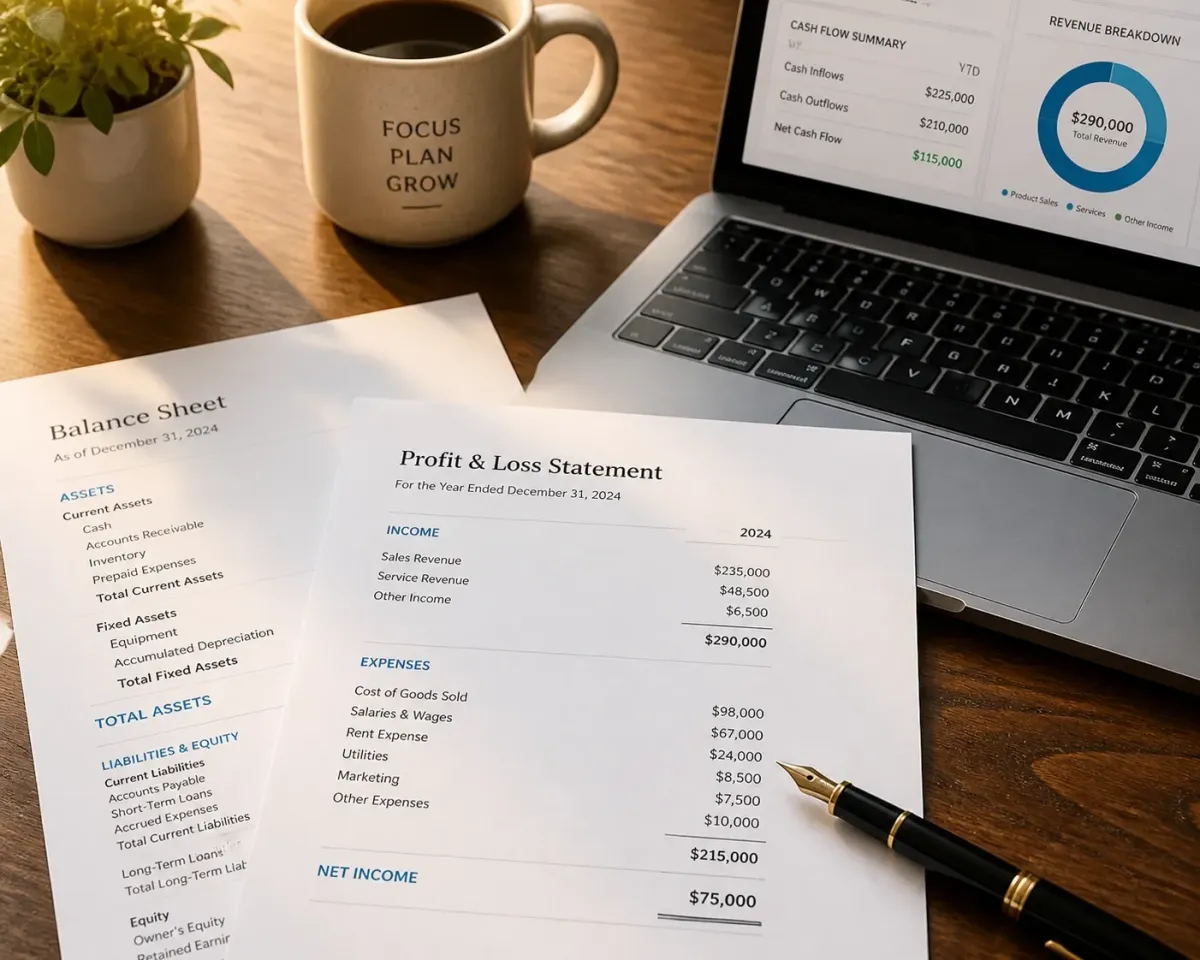
A P&L is an output, not the work. The number on the report is only useful if the transactions behind it have been recorded, categorized, reconciled, and reviewed correctly.
First, understand what estimated taxes cover
Estimated tax payments generally apply to income that does not have enough withholding attached to it. For small business owners, that may include:
Business income from a sole proprietorship
Income passed through from a partnership or S corporation
Self-employment tax
Interest, dividends, rental income, or capital gains
Other income not covered by paycheck withholding
Individuals, including sole proprietors, partners, and S corporation shareholders, generally may need to make estimated payments if they expect to owe at least $1,000 when they file, after withholding and refundable credits.
The exact calculation depends on your full tax picture: not only your business revenue. Your filing status, deductions, credits, other household income, self-employment tax, and prior payments all matter.
That is why “just set aside 25%” may be a starting point for a conversation, but it is not a complete estimated tax calculation.
What should you do if you missed the Q3 estimated tax payment?
If your Q3 estimated taxes were due September 15 and you did not pay, start with these three steps.
1. Determine what was actually paid
Review your payment records, including:
Federal estimated tax payments
State estimated tax payments
Any 2025 overpayment applied to 2026
Federal withholding from wages, pensions, or other income
Payments made through your tax professional or online tax account
Do not rely on memory. A payment that was scheduled but rejected, applied to the wrong tax year, or made under the wrong taxpayer identification number may not count the way you expect.
The IRS says you can review payment history and make payments through your online account. You can also review current payment options through IRS.gov/payments.
2. Make the late payment as soon as you can
A late payment may reduce the amount of time an underpayment remains outstanding. It may not erase any penalty related to the missed deadline, but waiting longer generally does not improve the situation.
Use the appropriate payment method for your situation. If you are unsure whether to make a late Q3 payment, a Q4 payment, or both, coordinate with a qualified tax professional.
3. Recalculate the remaining amount
Do not automatically take the missed Q3 payment and add it to a standard Q4 payment. Your income may have changed since the beginning of the year. You may also have made other payments, received additional deductions, or experienced a significant change in profitability.
The better question is:
> Based on what the business has actually earned so far, what is the remaining amount I should plan for?
That answer starts with current books.
How to estimate your Q4 payment from year-to-date income
The IRS provides Form 1040-ES to help individuals calculate estimated tax. The general process involves projecting your full-year:
Adjusted gross income
Taxable income
Federal income tax
Self-employment tax
Deductions and credits
Withholding and estimated tax payments
For a practical Q4 planning estimate, gather your year-to-date financial information and work through the following process:
Step 1: Start with reconciled year-to-date revenue and expenses
Review your year-to-date P&L, but do not stop at the report.
Confirm that:
Bank and credit card accounts are reconciled through the latest month
Revenue is recorded in the correct periods
Business expenses are categorized correctly
Owner distributions are not being treated as expenses
Loan proceeds are not being treated as income
Major equipment purchases are recorded appropriately
Payroll and contractor costs are complete
Accounts receivable and accounts payable are reasonably current
A P&L is generated when someone runs a report. It does not prove that the underlying work was completed correctly.
Step 2: Project the rest of the year
Estimate what you expect to earn and spend during October, November, and December.
Consider:
Seasonal revenue changes
Contracts already signed
Expected customer payments
Holiday or year-end payroll
Bonuses
Inventory purchases
Planned equipment purchases
Upcoming business expenses
Changes in staffing or pricing
If your business is seasonal, dividing your expected annual tax evenly into four payments may not reflect the timing of your income. The IRS allows an annualized income installment method in certain situations, which may help match payments to when income was actually earned. Your tax professional can determine whether that method is appropriate.
Step 3: Account for self-employment tax and personal factors
Many business owners focus on income tax and forget that self-employment tax may also be part of the calculation.
Your estimated tax may also be affected by:
A spouse’s wages
Retirement contributions
Health insurance deductions
Qualified business income considerations
Dependents and tax credits
Investment income
Prior-year tax liability
Other business entities you own
This is one reason bookkeeping and tax planning work best together. Your bookkeeper can help establish reliable business income and expense information, while your tax professional applies the tax rules to your complete personal and business situation.
How safe-harbor rules can guide your planning
The federal estimated tax safe-harbor concept generally allows many taxpayers to avoid an underpayment penalty if they pay enough through withholding and estimated payments during the year.
For 2026, the general thresholds are based on paying at least the smaller of:
90% of your expected 2026 total tax, or
100% of the tax shown on your 2025 return
For certain higher-income taxpayers, the prior-year threshold is generally 110% of the 2025 tax liability. The income threshold and special rules can vary based on filing status and circumstances, so confirm the applicable requirement with your tax professional.
Safe harbor is useful for planning, but it does not necessarily mean you will not owe money when you file your return. You could avoid an estimated tax underpayment penalty and still have a balance due in April.
Also, payment timing matters. If your income was uneven during the year, an annualized calculation may be relevant. If you missed an earlier installment, the result may depend on how much was owed and when the income was received.
Use the IRS estimated tax guidance and 2026 Form 1040-ES as official references, and coordinate with a qualified tax professional for advice specific to you.
Why current books matter before you calculate
Estimated taxes are only as reliable as the income and expense information used to calculate them.
If your books are missing transactions, contain unreconciled accounts, or show incorrect balances, your year-to-date profit may be overstated or understated. That can affect:
The amount you set aside
The amount you pay
Your cash flow plan
Your year-end purchasing decisions
Your ability to evaluate profitability
The accuracy of your eventual tax return
If your books are not current, a bookkeeping cleanup may be the appropriate first step. At Bookkeeping Made Simple, cleanup engagements are priced at $997, $1,997, or $3,500, depending on the scope and condition of the accounts.
For ongoing support, our bookkeeping and advisory services combine monthly reconciliation, financial statements, cash flow analysis, and year-round financial guidance. This gives you more than a report at tax time. It gives you financial information you can use while decisions are still in front of you.
A simple Q4 estimated tax checklist
Before January 15, 2027:
Confirm whether your Q3 payment was made and processed
Review all federal estimated payments and withholding
Bring your bookkeeping current through the latest month
Reconcile business bank and credit card accounts
Review year-to-date revenue, expenses, and profit
Project income and expenses for the rest of 2026
Consider self-employment tax and other household income
Ask whether the safe-harbor or annualized income method applies
Coordinate with your tax professional
Set aside the expected payment in a dedicated account
Submit the Q4 payment through an approved IRS payment method
The goal is not to predict your tax bill down to the dollar in September. The goal is to replace guesswork with a reasonable, documented estimate based on reliable information.
Q4 is easier to manage when you know what the business has actually earned, what cash is available, and what obligations are approaching.
If you want help getting the financial information behind your tax planning in order, book a Financial Clarity Call with Bookkeeping Made Simple. We will talk through your current situation, answer your questions, and help you understand what a clear path forward could look like: without pressure.