The Q4 Decisions That Require Clean Books to Make Well
The Q4 Decisions That Require Clean Books to Make Well

By Donna Harris, MBA, MAcc, CEO of Bookkeeping Made Simple
Q4 is when many small business owners make some of their biggest decisions of the year.
Should you purchase equipment before December 31? How much should you set aside for estimated taxes? Can the business afford a year-end distribution or bonus? Is it time to hire?
The challenge is that each decision depends on a slightly different part of your financial picture. Revenue alone cannot answer these questions. Neither can your bank balance. And a P&L that has not been reconciled or reviewed may give you confidence without giving you accuracy.
That is the central idea behind good financial management:
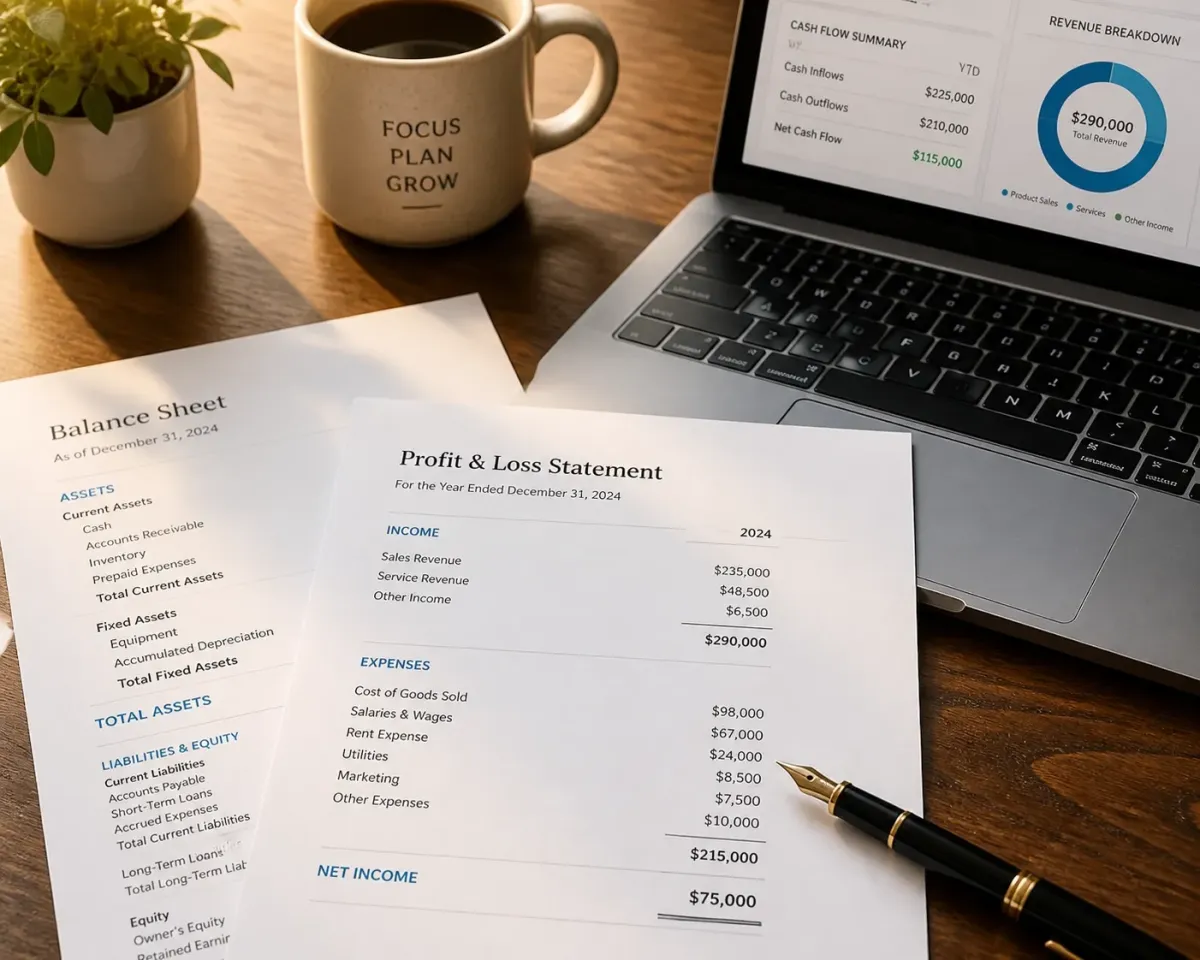
> A P&L is an output, not the work.
The work is reconciling accounts, investigating discrepancies, correctly recording assets and liabilities, reviewing cash flow, and making sure the numbers reflect what actually happened in your business.
When that work is done, clean books make Q4 business decisions and financial planning much more intentional.
1. Equipment Purchases, Bonus Depreciation, and Section 179
Many business owners consider purchasing equipment, vehicles, technology, or other assets before year-end. Depending on the asset, how it is used, and current tax law, bonus depreciation or a Section 179 election may allow you to deduct some or all of the qualifying cost sooner.
But “it creates a tax deduction” is not enough reason to make a purchase.
Before you buy, you need to know:
Your actual year-to-date income
Your projected full-year taxable income
Your current cash position
Your upcoming payroll, vendor, debt, and tax obligations
Whether the business genuinely needs the asset
Whether the asset will be placed in service within the required timeframe
How the purchase will affect your cash flow into Q1
Clean books help separate a strategic purchase from an expensive attempt to reduce taxes. If your income is lower than expected, the deduction may not provide the benefit you assumed. If your cash position is tight, a large purchase could create pressure that outweighs the tax savings.
The accounting treatment matters, too. A qualifying asset should not simply be categorized as an ordinary expense. It may need to be recorded on the balance sheet and included in the appropriate fixed-asset and depreciation records. That information ultimately supports the tax analysis, including any reporting on IRS Form 4562.
Your books do not make the tax decision for you. They give you the information to discuss the decision intelligently with your tax professional.
2. Q4 Estimated Taxes
Estimated tax planning requires more than looking at last year’s return.
To estimate your current-year obligation, you need a reasonably accurate picture of:
Year-to-date business income
Year-to-date deductible expenses
Owner compensation and other income
Estimated Q4 revenue and expenses
Prior estimated tax payments
Federal and state withholding
Planned equipment purchases or other significant deductions
If your books are current and reconciled, your tax professional can use actual results through Q3 and a realistic Q4 forecast. That is very different from guessing based on the cash currently sitting in your bank account.
You also need to understand the distinction between profit and cash. A business may show strong income while waiting on customers to pay. It may have cash available today but significant payroll, inventory, or tax obligations due in the next several weeks.
That is why estimated tax planning should include both an income projection and a cash flow review.
The IRS provides guidance on estimated tax calculations and payment requirements in Publication 505. However, the right approach for your business depends on your entity structure, income sources, prior payments, deductions, and individual circumstances.
If an earlier estimated payment was missed or underpaid, do not ignore it. Gather current financial information and speak with your tax professional about your options. Clean books make that conversation faster, clearer, and more productive.
3. Year-End Owner Distributions and Bonuses
A profitable business does not automatically have money available for distribution.
Before taking an owner distribution or approving a year-end bonus, you need to know what the business can safely afford after accounting for:
Unpaid vendor bills
Payroll and payroll taxes
Debt payments
Upcoming estimated taxes
Inventory or equipment purchases
Cash needed for January operations
Existing accounts payable and other liabilities
This is particularly important for S corporations. Distribution decisions may need to be considered alongside reasonable compensation, year-to-date profit, shareholder basis, and the potential impact on the qualified business income deduction. These issues should be reviewed with your tax professional, but the conversation needs to begin with accurate books.
Your bank balance is only one piece of the decision. It does not tell you whether every transaction has been recorded, whether accounts receivable is collectible, or whether a liability has been overlooked.
A clean balance sheet and current cash flow report help you answer a more useful question:
> “After we meet our obligations and protect the business’s operating needs, how much cash can we responsibly distribute?”
That answer may be different from the amount you see when you open your bank account.

4. Hiring and Compensation Decisions
Q4 is often when business owners plan for the coming year. You may be considering a full-time employee, a contractor, a seasonal hire, a raise, or a new bonus structure.
The right question is not simply, “Can I afford this person this month?”
You need to understand whether the business can support the full cost of the decision over time. That includes:
Wages or contractor payments
Employer payroll taxes
Benefits
Insurance
Recruiting and onboarding costs
Equipment and software
Training time
The revenue or capacity the hire is expected to create
Your books should help you evaluate labor costs as a percentage of revenue, gross margin by service or product, and the cash flow outlook for the next several months.
For example, a business may be growing revenue but experiencing margin compression. In that situation, adding payroll may increase activity without improving profitability. Another business may have healthy margins and consistent demand but lack the operational capacity to serve more customers. Hiring could be the right growth decision: but only if the cash flow forecast supports it.
A current P&L can show you labor expense. A reliable balance sheet and cash flow forecast help you understand whether the business can carry the commitment.
What Clean Books Should Include Before You Make Q4 Decisions
Before making significant Q4 financial decisions, review whether your books include:
Reconciled bank and credit card accounts
The recorded balances should agree with actual statements.Accurate loan and liability balances
Principal, interest, and payments should be recorded correctly.Correct income and expense categorization
Assets, ordinary expenses, owner activity, and loan proceeds should not be mixed together.Updated accounts receivable and accounts payable
You should know what customers owe you and what your business owes others.Current payroll records
Payroll expenses, tax liabilities, and employee-related obligations should be up to date.A reviewed P&L, balance sheet, and cash flow report
Each report answers a different question. Looking at only one can leave important information out.A realistic forecast
Historical results matter, but Q4 decisions also require a view of what is likely to happen next.
If your books are behind or unreliable, a categorization tool alone will not resolve the underlying issues. A legitimate cleanup involves validating accounts, reconciling periods, investigating discrepancies, correcting errors, and verifying the balance sheet.
At Bookkeeping Made Simple, cleanup options are priced at $997, $1,997, or $3,500, depending on the scope and condition of the records. You can learn more about bookkeeping cleanup or explore our ongoing bookkeeping and advisory services.
Make Q4 Decisions From Information, Not Assumptions
Clean books do not guarantee that every Q4 decision will be easy. They do give you something much more valuable: a financial picture you can use.
You can evaluate an equipment purchase based on income, cash, and actual business needs. You can calculate estimated taxes from current information. You can consider distributions without confusing cash in the bank with available profit. You can plan hiring around margins and future cash flow instead of optimism alone.
That is what financial clarity looks like in practice.
The P&L is the output. The confidence comes from the work behind it.
If you want to enter Q4 with reliable numbers and a clear path forward, book a free Financial Clarity Call with Bookkeeping Made Simple.