The 'Same Old Way' is Holding You Back: How Modernizing Your Books Drives Real Growth
![[HERO] The 'Same Old Way' is Holding You Back: How Modernizing Your Books Drives Real Growth](https://cdn.marblism.com/v5Ue3-sErKd.webp "[HERO] The 'Same Old Way' is Holding You Back: How Modernizing Your Books Drives Real Growth")
You know what's wild? Some businesses hit Year Five or Year Ten, and financially speaking, they're still operating like it's their first year in business.
Same spreadsheet. Same shoe box of receipts. Same "I'll figure it out at tax time" energy. Same old way, year after year after year.
If you've ever seen Groundhog Day, you know the deal. Bill Murray wakes up to the same song, the same weather, the same annoying conversations, over and over again until he finally learns his lesson and changes his approach.
Your business might be stuck in its own version of Groundhog Day, and your bookkeeping is the alarm clock that keeps going off.
The "Same Old Way" Trap
Here's the thing: when you started your business, you were probably just trying to survive. You cobbled together a system that worked enough. Maybe it was a basic spreadsheet. Maybe it was a notebook and a prayer. Maybe it was literally dumping receipts in a box and hoping your tax preparer wouldn't charge you triple.
And hey, no judgment. We've all been there.
But here's where the trap snaps shut: that survival-mode system becomes your default forever. You get comfortable with it. You know where everything is (sort of). You tell yourself, "If it ain't broke, don't fix it."
Except... it is broke. You just don't realize it yet.

When you're stuck doing things the same old way, you're not just missing out on efficiency. You're actively preventing your business from growing. Every hour you spend manually entering data is an hour you're not spending on strategy, sales, or actually running your business. Every month-end scramble to reconcile accounts is a month where you had zero visibility into your cash position until it was too late to do anything about it.
That's not bookkeeping. That's busywork dressed up as responsibility.
What "Modernizing" Actually Means (Hint: It's Not Scary)
Let's clear something up right away: modernizing your business processes doesn't mean you need to become a tech genius overnight or invest in some mega-expensive enterprise software that requires a degree to operate.
Modernizing your books really just means working smarter, not harder. It means using tools that already exist to automate the repetitive stuff, so you can focus on the decisions that actually move the needle.
The business process automation benefits are real, and they're not just for Fortune 500 companies. Small businesses see some of the biggest returns from automation because they're usually the ones drowning in manual work.
Think about it:
Automated bank feeds mean your transactions flow directly into your bookkeeping software instead of you typing them in one by one
Receipt capture apps let you snap a photo instead of filing paper in a drawer you'll lose track of
Automated invoicing and payment reminders mean you actually get paid on time without chasing people down
Real-time dashboards give you a snapshot of your financial health without waiting until month-end (or tax season) to find out you're in trouble
None of this is rocket science. But it is transformational when you've been doing everything by hand for years.
Small Business Growth Strategies Start With Your Numbers
Here's what nobody tells you when you're starting out: you can't grow what you can't see.
One of the most effective small business growth strategies is having clear, accurate, timely financial data. Not three months after the fact. Not when your tax preparer hands you a report in April. But now, when you can actually do something with the information.
When you modernize your bookkeeping:
You know your profit margins on different products or services
You can identify which clients are actually profitable (and which ones are costing you money)
You spot cash flow problems before they become emergencies
You make decisions based on data instead of gut feelings
That last one is huge. Your gut is great for a lot of things, but "Should I hire another employee?" or "Can I afford to expand?" are questions that need numbers, not hunches.
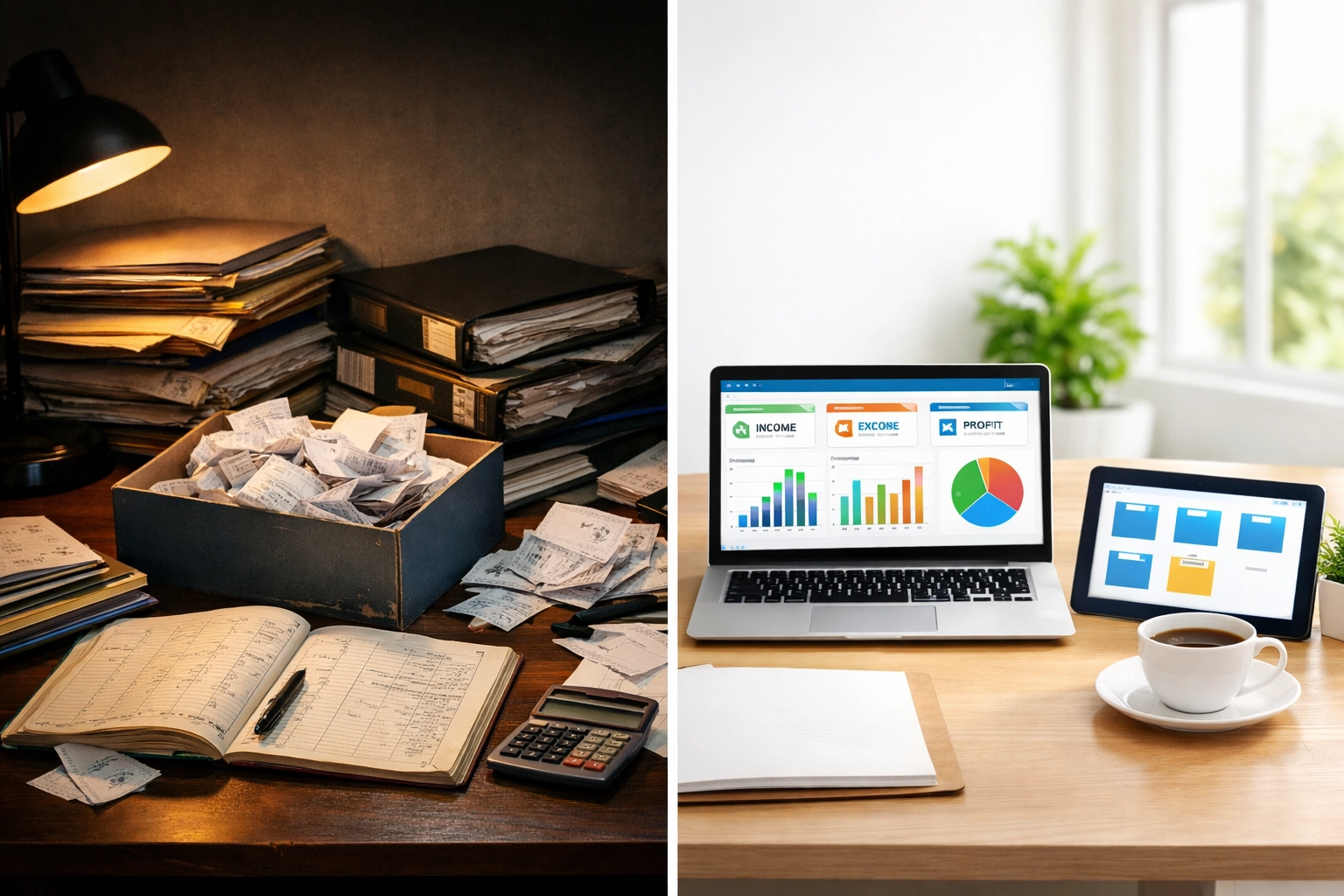
And here's the kicker: when your books are automated and organized, you're not just reacting to what happened last month. You're proactively managing your business. You're forecasting. You're planning. You're actually in control.
How to Scale a Small Business Without Losing Your Mind
Let's talk about scaling for a second, because this is where the "same old way" becomes a genuine crisis.
You know how to scale a small business? You create systems that work without you having to personally touch every single transaction. You build infrastructure that can handle growth before you're drowning in it.
If you're still manually entering receipts and reconciling accounts by hand when you hit Year Five, guess what happens when you double your revenue? You're going to need to hire someone full-time just to keep up with the data entry. That's not growth. That's just expensive chaos.
Scaling requires improving business operations at every level, and your financial systems are the foundation of everything else. You can't scale your marketing, your sales, or your team if your back-office processes are stuck in 2010.
Modernizing business processes is what makes scaling possible. When your bookkeeping is automated and your financial reporting is clean, you can focus on the growth activities that actually matter: like serving more customers, developing new products, or finally taking that vacation you've been putting off for three years.
The Real Cost of Staying Stuck
Still not convinced? Let's talk about what "the same old way" is actually costing you.
Time: How many hours a month do you spend on bookkeeping tasks that could be automated? Even if it's just 5-10 hours, that's 60-120 hours a year. What could you do with an extra 100 hours?
Money: Late payments because you forgot to send invoices. Missed deductions because your records were a mess. Bank fees because you didn't see that cash crunch coming. It adds up fast.
Opportunities: That client who wanted a proposal but you were too buried in paperwork to get it to them on time. That business loan you qualified for but didn't apply for because you couldn't pull together clean financials. The strategic partnership you passed on because you weren't confident in your numbers.
Stress: Let's be honest: the constant low-grade anxiety of knowing your books are a disaster is exhausting. It's the thing that keeps you up at 2 AM during tax season.

The "same old way" isn't just inefficient. It's expensive, stressful, and limiting. And the longer you stick with it, the harder it gets to break the cycle.
Breaking the Groundhog Day Loop
So how do you actually make the shift? How do you go from "same old way" to "modern, growth-oriented business"?
Here's the good news: you don't have to do it all at once.
Start with one process. Maybe it's automating your bank feeds. Maybe it's switching from a spreadsheet to actual bookkeeping software. Maybe it's just getting your receipts organized digitally instead of in a shoe box.
Pick one thing that's currently driving you crazy, and modernize that. Then pick the next thing. Then the next.
And here's where we come in: at Bookkeeping Made Simple, our whole job is helping small business owners break out of this exact cycle. We set up modern systems that actually work for your business, train you on how to use them, and take the manual busywork off your plate so you can focus on growth.
We're not just doing your bookkeeping the way you've always done it, faster. We're reimagining your financial processes to support where your business is going, not where it's been.
The Bottom Line
The "same old way" isn't tradition. It's not being careful or responsible. It's just... stuck.
And being stuck doesn't serve you, your business, or your sanity.
Modernizing your bookkeeping and business processes isn't about chasing shiny objects or adopting technology for technology's sake. It's about building systems that scale with you, give you visibility into your numbers, and free you up to actually run your business instead of being buried in administrative work.
You don't have to keep repeating Year One forever. You can break the loop, modernize your approach, and finally build the business you actually want: one that grows, adapts, and gives you room to breathe.
Ready to stop the Groundhog Day cycle? Let's talk. We'll help you build a financial system that actually works for where you're going, not where you've been.