What a Clean Year-End Actually Looks Like
What a Clean Year-End Actually Looks Like

Two business owners reach December with the same number of working days left in the year.
One opens a current profit and loss statement, reviews cash flow, and schedules a conversation with their CPA. They have questions, but they also have dependable information to work from.
The other is searching through email for receipts, wondering whether old transactions were categorized correctly, and trying to decide whether the numbers on the screen can be trusted.
The difference is not luck. It is the condition of their books before year-end arrives.
Clean year-end books for a small business are more than a completed checklist or a feeling of relief. They give you an advantage. Reliable financial information allows you to make decisions while there is still time to act: not after the year has already closed.
What does a clean year-end actually mean?
Clean books do not mean that your business had a perfect year. They mean your financial records accurately reflect what happened and can support the decisions you need to make next.
At a minimum, a clean year-end should include:
Bank and credit card accounts reconciled through the most recent month
Loan and line-of-credit balances verified
Payment processors such as Stripe, Square, or PayPal reviewed
Income and expenses recorded without duplicate or missing transactions
Accounts receivable and accounts payable reviewed
Payroll and owner compensation tied to supporting reports
Fixed assets, equipment purchases, and depreciation information updated
Owner draws or distributions recorded correctly
Unusual or unexplained balance sheet accounts investigated
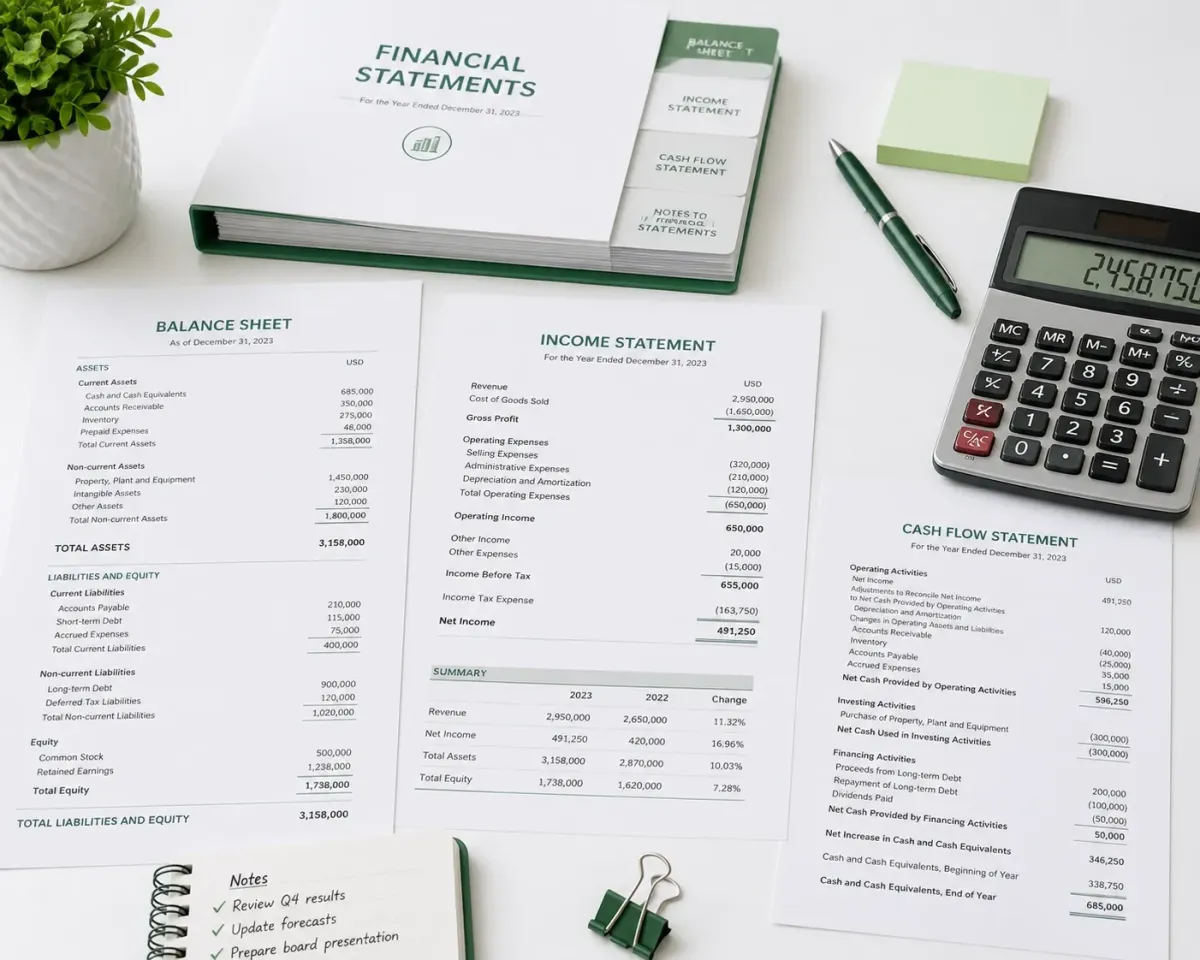
Profit and loss and balance sheet reports reviewed for reasonableness
The goal is not simply to make the reports look organized. The goal is to know that the balances mean what you think they mean.
That is the foundation of reliable books at year-end.
Two owners, two Decembers
Consider two owners of similar service businesses.
Owner One: Entering December with reliable books
By December, Owner One has current monthly bookkeeping and reconciled accounts. Their bookkeeper has identified a duplicate expense, corrected an old loan balance, and confirmed that customer payments are being recorded properly.
When they meet with their CPA, they can discuss real questions:
Is the business on track to meet its profit goal?
Should the company purchase equipment before year-end?
Would a bonus depreciation or Section 179 decision make sense?
Are estimated tax payments aligned with projected income?
How much cash should remain in the business?
Is a year-end distribution reasonable?
What investments or hiring decisions should be included in the 2027 plan?
The owner is not asking, “Are these numbers right?” They are asking, “What should we do next?”
Owner Two: Entering December with uncertain books
Owner Two has been relying on automated transaction downloads and occasional categorization. Several months have not been reconciled. A credit card balance looks too high, an old receivable remains open, and the owner is not sure whether personal purchases were recorded as business expenses.
When December arrives, every financial conversation starts with uncertainty.
Before discussing equipment purchases, distributions, or 2027 planning, someone must determine whether the current reports are accurate. Tax planning becomes more difficult because the projected profit may change once the books are corrected. Cash decisions become cautious because the actual cash position is unclear.
This owner may still have time to address the problems, but the work is now more urgent and more disruptive.
Reliable books make year-end decisions possible
Year-end bookkeeping is valuable because it creates time for decisions. When your financial statements are current and supported by reconciliations, you can use them before the year closes.
1. Bonus depreciation and equipment decisions
If you are considering equipment, technology, vehicles, or other significant purchases, your books can help you understand the business impact before committing cash.
Your tax professional can evaluate whether bonus depreciation, Section 179, or another treatment is appropriate. But that conversation is much more useful when your current profit, cash position, existing fixed assets, and projected results are accurate.
A bookkeeping system cannot make the tax decision for you. It can provide the reliable information your CPA needs to model the options.
2. Estimated tax planning
Estimated tax planning should not begin with a guess.
With current books, you can compare year-to-date profit, expected fourth-quarter activity, and estimated tax payments already made. Your tax professional can then assess whether additional payments or other planning steps may be appropriate.
This is not about making taxes the center of your business. It is about avoiding financial decisions based on incomplete information.
3. Year-end distributions
Business owners often want to know whether they can take a distribution before the year closes. The answer depends on more than the bank balance.
You also need to consider:
Current and projected profitability
Unpaid bills and upcoming obligations
Tax liabilities
Debt payments
Cash reserves
Owner equity and prior distributions
The structure of your business
Clean books do not replace professional tax or legal advice, but they help you and your advisors see the full picture. A distribution decision made from reliable information is very different from one based only on the amount currently sitting in a checking account.
4. 2027 financial planning
Your year-end financial statements should help you plan the next year.
Look at the information your books can provide:
Which services generated the strongest margins?
When does cash flow typically tighten or improve?
How much revenue can your current team handle?
Are prices keeping pace with costs?
What expenses increased without producing a clear return?
Can the business support a hire, new equipment, or expanded marketing?
What revenue and cash reserve targets are realistic for 2027?
This is where bookkeeping becomes more than recordkeeping. It becomes a planning resource.
The clean year-end is built before December
A clean year-end is not created by rushing through a stack of corrections during the final week of the year. It is built through consistent monthly bookkeeping, timely reconciliations, and regular review of the financial statements.
If your books are current, ongoing bookkeeping services can help maintain that reliability throughout the year.
If your books are behind or contain unresolved discrepancies, a cleanup and catch-up engagement can establish a dependable starting point. Bookkeeping Made Simple offers cleanup options priced at $997, $1,997, and $3,500, depending on the scope and complexity of the work.
A legitimate cleanup is not just transaction categorization. It may include reviewing the oldest unreconciled period, verifying account balances, investigating discrepancies, correcting errors, and delivering financial statements you can use.
Once the books are reliable, ongoing bookkeeping and advisory support can help you keep them that way.
What to do before year-end
You do not need to solve everything at once. Start with these practical steps:
Review the latest month that has been reconciled.
If your books are not current through the most recent month, identify the gap.Look at the balance sheet, not only the profit and loss statement.
Old loans, unexplained assets, credit card balances, and holding accounts often reveal issues that the P&L does not show.List upcoming decisions.
Include equipment purchases, hiring, distributions, debt payments, major contracts, and 2027 investments.Gather questions for your CPA or advisor.
Reliable books make those conversations more specific and productive.Get support early if the records need work.
The sooner you understand the scope of a cleanup, the more options you have before the year closes.
The business owner who does this work in October does not necessarily have fewer responsibilities in December. They have better information for handling those responsibilities.
That is what a clean year-end really looks like: not perfection, but clarity, options, and the ability to make decisions with confidence.
Written by Donna Harris, MBA, MAcc, CEO of Bookkeeping Made Simple.
Ready to make your year-end useful?
Book a free Financial Clarity Call with Bookkeeping Made Simple to discuss ongoing bookkeeping, cleanup and catch-up work, or advisory support. We will help you understand where your books stand and identify the next practical step toward a reliable year-end.